
EVA and PUR hot melt adhesives can both provide fast, efficient bonding, but they are designed around different performance requirements. EVA is often the more practical choice for standard packaging, bookbinding, and general assembly because of its processing simplicity and cost efficiency. PUR becomes more attractive when the finished bond must withstand demanding heat, moisture, or mechanical conditions.
The right choice should therefore be based on the substrate, production process, equipment, required bond strength, and service environment rather than simply asking which adhesive is stronger.
The fundamental difference is how the adhesive develops its final bond.
EVA, or ethylene-vinyl acetate, is a thermoplastic hot melt. It is heated until it becomes fluid, applied to the substrate, and then develops its primary bond as it cools and solidifies.
PUR, or polyurethane reactive hot melt, also forms an initial bond through cooling, but it continues to react with moisture after application. This post-curing process creates a cross-linked structure that can provide enhanced resistance to heat, moisture, and mechanical stress.
This difference affects not only the final bond but also equipment requirements, process control, storage, and production cost.
| Factor | EVA Hot Melt | PUR Hot Melt |
|---|---|---|
| Initial setting | Fast | Fast initial set |
| Final bonding mechanism | Cooling and solidification | Cooling followed by moisture curing |
| Heat resistance | Moderate to high depending on formulation | Generally high after curing |
| Moisture resistance | Formulation dependent | Generally strong after curing |
| Processing complexity | Relatively simple | Requires tighter moisture control |
| Reworkability | Generally possible with heat | Limited after full cure |
| Typical cost | Lower | Higher |
| Typical applications | Packaging, bookbinding, general assembly | Demanding assembly, woodworking, lamination |
These characteristics are general guidelines. Individual grades can vary substantially, so the technical data sheet for the selected adhesive should always be used when establishing production parameters.
EVA is generally suitable when the application requires fast processing, moderate service conditions, simple equipment operation, and controlled adhesive cost.
Standard packaging is a good example. If a carton is stored and transported under normal conditions, a well-selected EVA formulation can provide sufficient adhesion without the additional process complexity associated with reactive PUR.
EVA is also useful when manufacturers need a thermoplastic adhesive that can be reheated for selected rework processes. This can be an advantage in manufacturing environments where components occasionally need to be repositioned or repaired.
For buyers comparing EVA hot melt adhesive products, the important comparison should include viscosity, open time, set speed, heat resistance, substrate compatibility, and actual consumption rather than simply the adhesive's chemical classification.
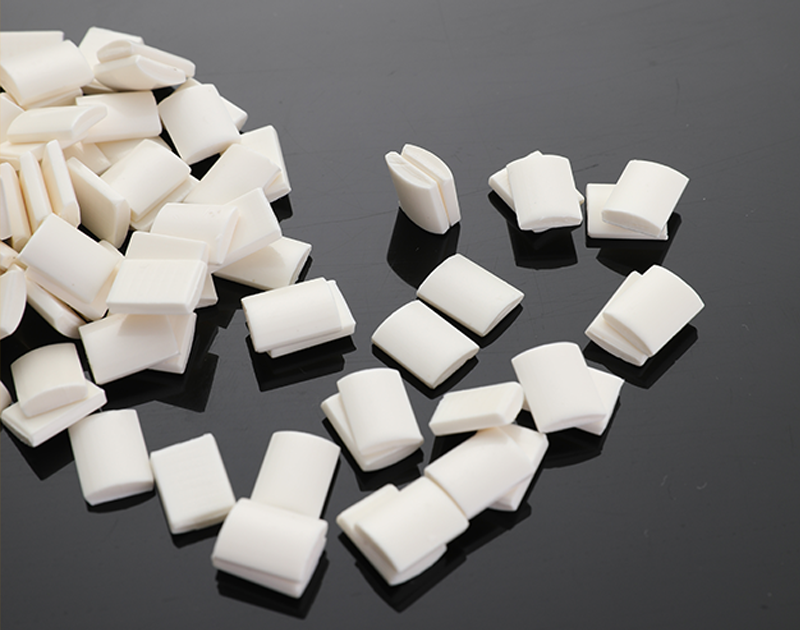
PUR becomes more attractive when the finished bond must withstand demanding environmental or mechanical conditions.
Typical factors include:
High service temperatures
High humidity
Water exposure
Thermal cycling
High mechanical stress
Difficult substrates
Long-term durability requirements
After curing, PUR forms a cross-linked structure that can provide greater resistance than a conventional thermoplastic hot melt in many demanding applications.
This makes PUR particularly useful for selected woodworking, furniture, lamination, automotive, and industrial assembly applications where long-term performance is more important than minimum adhesive cost.
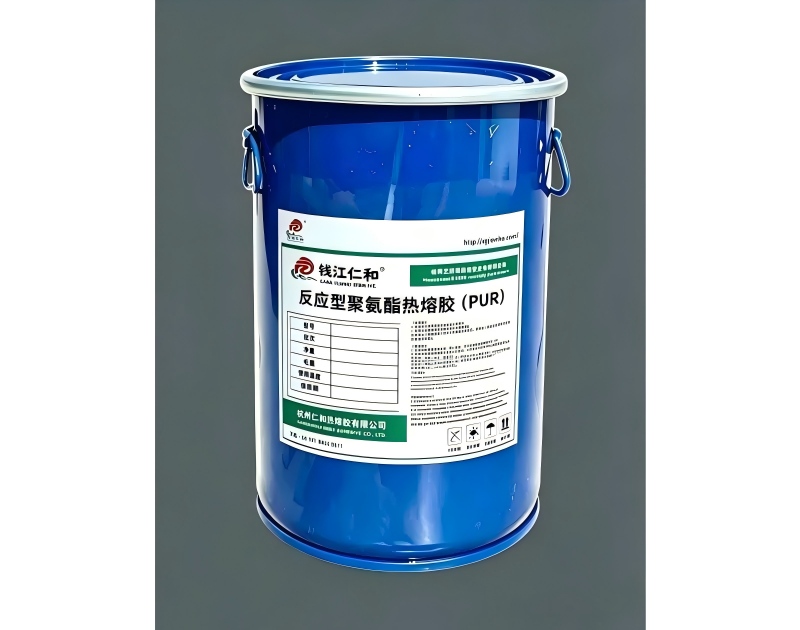
EVA normally has an advantage in material price and process simplicity. PUR typically involves a higher adhesive cost and requires equipment and handling procedures that account for its reactive nature.
However, comparing only price per kilogram can lead to the wrong conclusion.
Manufacturers should calculate the total cost of bonding, including adhesive consumption, application efficiency, production speed, equipment maintenance, rejects, rework, and potential product failures.
If EVA meets all performance requirements, choosing PUR may provide little commercial benefit. If a PUR adhesive significantly reduces failure rates in a demanding environment, its higher purchase price may be justified.
For conventional carton sealing and paperboard packaging, EVA is often a practical starting point because it provides rapid setting and straightforward processing.
The requirements become more complex when the package contains difficult coatings, unusual substrates, or needs to withstand severe temperature and moisture conditions.
In these situations, packaging adhesive selection should consider the entire packaging system, including board construction, coating, machine speed, compression time, and storage environment.
It is also important to consider adhesive consumption. A formulation that achieves the required bond with a smaller and more consistent bead may reduce total operating costs.
Generally, PUR offers better long-term heat resistance after curing.
EVA remains thermoplastic, meaning that prolonged exposure to elevated temperatures can cause softening or creep. This does not make EVA unsuitable for heat-exposed applications; specialized EVA grades can provide substantial heat resistance.
The important distinction is the required service condition. If the product will only experience occasional moderate heat, EVA may be sufficient. If it will remain under load at elevated temperature for extended periods, PUR may provide a more appropriate performance margin.
Actual testing should be conducted at the intended service temperature whenever heat resistance is critical.
In many applications, yes. After moisture curing, PUR can provide strong resistance to water and humidity.
This can be particularly valuable in products exposed to condensation, high humidity, or occasional water contact.
However, the actual performance depends on the selected formulation and substrate. Manufacturers should not assume that every PUR product provides identical moisture resistance.
Both adhesive technologies require controlled heating, but the appropriate processing conditions vary by formulation.
The adhesive must reach sufficient fluidity to wet the substrate without being exposed to unnecessary thermal stress.
For EVA systems, operating below the recommended range can increase viscosity and reduce wetting. Excessive heat can accelerate degradation and increase char formation.
For PUR, temperature control is particularly important because prolonged exposure to excessive heat can affect the reactive adhesive. Equipment should also be designed to minimize unwanted moisture exposure during storage and processing.
When establishing machine parameters, manufacturers should follow the recommended hot glue melting temperature rather than assuming that a higher temperature will produce stronger adhesion.
EVA generally offers simpler equipment management because the adhesive remains thermoplastic throughout its normal processing cycle.
PUR systems require additional attention to moisture. Once exposed to moisture, reactive adhesive can begin curing, which may affect its storage stability and equipment performance.
Manufacturers using PUR should therefore establish suitable procedures for adhesive storage, container opening, tank management, nozzle protection, and equipment cleaning.
These additional requirements should be included when calculating the total investment and operating cost of switching from EVA to PUR.
PUR can provide advantages on certain difficult substrates, but adhesive chemistry alone does not determine success.
Surface energy, cleanliness, coating, moisture, substrate flexibility, and application temperature all influence adhesion.
For low-energy plastics or coated surfaces, the selected adhesive should be tested on the exact material rather than evaluated on a generic laboratory panel.
Surface preparation may also be necessary. Cleaning, corona treatment, plasma treatment, or other methods can improve wetting when appropriate.
A structured selection process can prevent unnecessary cost and performance problems:
Identify all substrates and surface treatments.
Define production speed and bonding cycle.
Determine required open time and set speed.
Establish service temperature.
Evaluate moisture and chemical exposure.
Define required long-term bond performance.
Check equipment compatibility.
Compare adhesive consumption and total operating cost.
Conduct production trials.
Validate performance under expected service conditions.
This approach is more reliable than selecting an adhesive solely because it has a higher nominal strength or a more advanced chemical composition.
PUR can provide superior long-term performance in many demanding environments, especially after curing. However, actual bond strength depends on the adhesive grade, substrate, application conditions, and joint design.
Generally, yes. EVA usually has lower material costs and simpler processing requirements.
For standard carton sealing, EVA is often sufficient and more economical. PUR may be considered when the packaging must withstand unusually demanding heat, moisture, or mechanical conditions.
PUR generally provides better long-term heat resistance after curing, although specialized EVA formulations can also perform well at elevated temperatures.
Usually. PUR requires tighter control of moisture exposure and equipment conditions because it is a reactive adhesive.
Sometimes. If testing confirms that EVA meets the required bond strength, temperature resistance, moisture resistance, and durability requirements, it can be a more economical alternative.
The choice between EVA and PUR should ultimately be based on application requirements rather than adhesive chemistry alone. EVA remains highly effective for many high-volume industrial processes, while PUR provides valuable advantages when long-term resistance and demanding environmental performance justify the additional cost and process control.
We assured you that your personal information will be kept confidential. The personal data we collect is only used to process your inquiry.


 Sep 20 2026


