
Choosing between hot melt adhesive powder, granules and film is not simply a matter of chemistry. The physical form changes how the adhesive is metered, transferred, heated and distributed across a substrate. For industrial buyers, the right choice depends on the bond geometry, coating pattern, line equipment, substrate sensitivity and the amount of process control required. A formulation that performs well as a granule in a tank-fed system may be inefficient as a powder, while a film can provide much tighter adhesive placement for lamination but add cost where continuous bulk coating is already available.
All three formats can belong to the same broad family of hot melt adhesive, but they enter the production line differently. Granules are normally melted in a reservoir and pumped, rolled or extruded onto the substrate. Film arrives as a pre-formed layer with controlled area coverage. Powder is distributed as particles and then activated by heat. That difference affects coating uniformity, adhesive add-on, open structure, equipment cleaning and how easily a factory can switch between product designs.
A useful way to select the form is to start with the geometry of the bond rather than the polymer name. Ask whether the adhesive must cover a continuous area, remain discontinuous for breathability, follow a complex shape, or run through an existing hot-melt tank. Those questions usually narrow the format before detailed formulation screening begins.
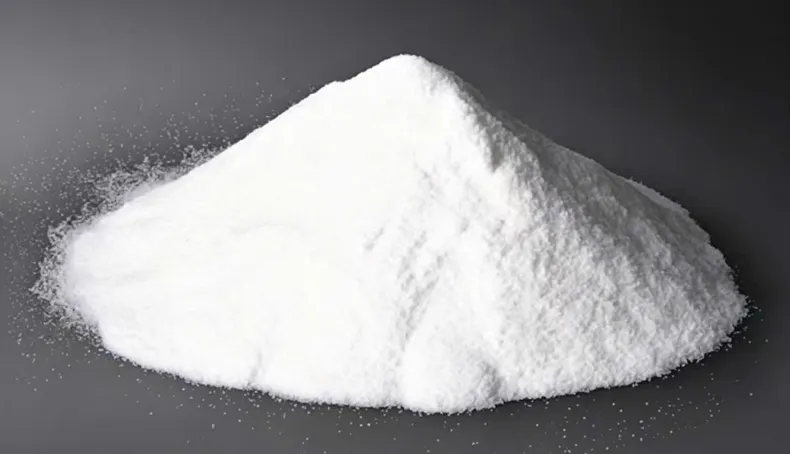
Hot melt adhesive powder is especially useful when the process benefits from distributed particles rather than a continuous molten bead or sheet. In textile lamination and interlining, powder can create a discontinuous adhesive pattern that preserves more softness and air permeability than a full-area film. It can also be suitable for scatter coating, powder-dot coating and other processes where adhesive add-on needs to be spread over a large surface.
The information gain for buyers is that powder selection should not stop at “which polymer bonds my substrate?” Particle distribution matters. A powder that is too coarse for the coating method can create uneven bonding points; one that is too fine can be harder to meter cleanly or may migrate into the substrate structure. The process engineer therefore needs to match powder form, coating method, heat input and target hand feel as one system.
Within the same form, polymer behavior still matters. EVA powder is often considered where easy thermal processing and flexible industrial bonding are priorities, while other chemistries may be selected when wash resistance, heat resistance or substrate compatibility become more demanding.
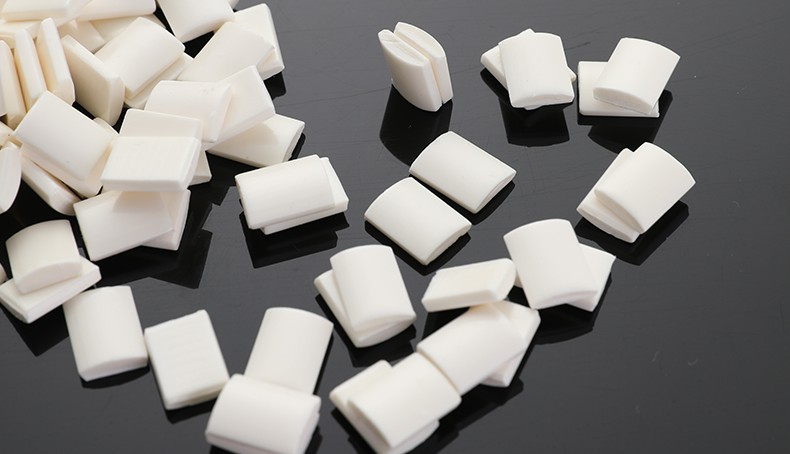
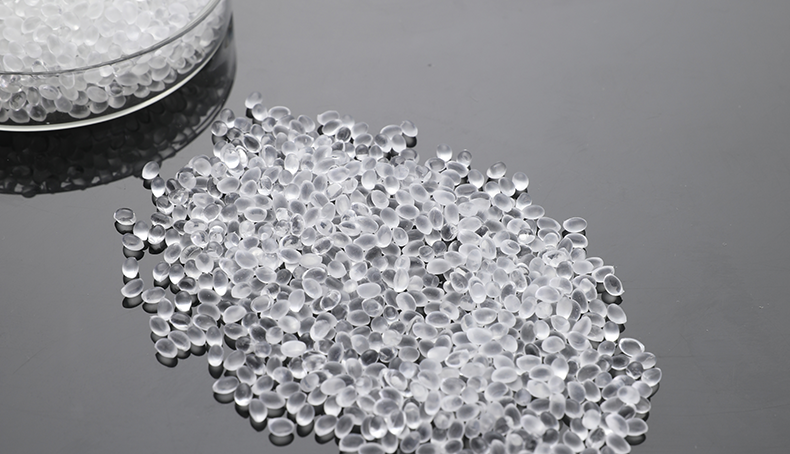
Granules are usually the most straightforward option for factories that already operate melt tanks, slot coaters, rollers, nozzles or extrusion systems. Their main advantage is process continuity: bulk material can be melted, pumped and applied at production speed without introducing a separate carrier layer. This makes granules attractive for packaging, profile wrapping, automotive interior bonding, tape coating and many continuous manufacturing lines.
Granules also give formulators and processors flexibility in application weight. The same adhesive family may be run at different coat weights or bead patterns depending on the equipment. The trade-off is that the plant must control melt temperature, residence time, viscosity stability and equipment cleanliness. Film and powder shift some of that metering complexity away from the melt tank, whereas granules place more responsibility on the dispensing system.
For applications that need elasticity, wash resistance or bonding to flexible substrates, TPU hot melt adhesive can be supplied in more than one physical form, including granule, film and powder formats. This is a good example of why form and chemistry should be evaluated separately: the polymer family defines much of the performance envelope, while the physical form determines how that performance is delivered on the line.
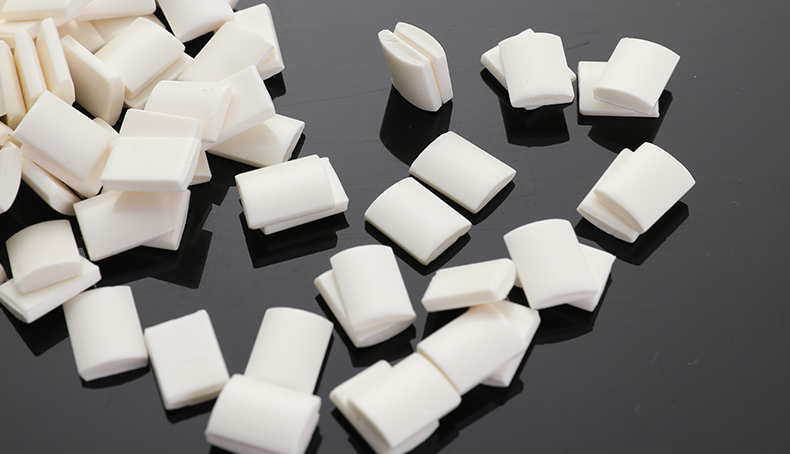
Film is the most controlled of the three forms when the production goal is a defined adhesive layer between two surfaces. Instead of asking the line to meter molten adhesive across the bond area, the converter places a pre-formed film and activates it with heat and pressure. That can simplify adhesive placement in laminates, reduce edge contamination and improve repeatability where the bond line must follow a specific sheet or panel geometry.
Film is not automatically the “higher quality” option. A continuous film can reduce breathability, add stiffness or create unnecessary adhesive coverage in applications that only need discrete bonding points. The correct question is whether a continuous bond line is beneficial. If the product needs waterproofing, full-area lamination or precise layer-to-layer placement, film becomes attractive. If softness, porosity or minimum adhesive add-on is more important, powder or patterned coating may be better.
Decision Factor | Powder | Granules | Film |
Adhesive placement | Discontinuous or distributed coating | Metered through melting/dispensing equipment | Pre-defined continuous layer |
Best fit | Textile coating, interlining, heat-transfer and selective lamination | High-throughput continuous coating, extrusion or bead application | Sheet-to-sheet or roll-to-roll lamination requiring controlled coverage |
Process control focus | Particle distribution, coat weight, heat transfer | Melt temperature, viscosity, residence time and dispensing | Film thickness, surface contact, heat, pressure and cooling |
Breathability / softness | Can preserve more open structure when applied discontinuously | Depends on coating pattern and add-on | Can reduce porosity when used as a continuous layer |
Material changeover | Powder handling and cleanup must be controlled | Tank and hose purge may be required | Relatively clean changeover if film widths and liners are compatible |
Once powder has been chosen as the right physical form, the next step is polymer selection. Do not choose on price or melting behavior alone. Compare the bonded substrates, flexibility requirement, washing or cleaning exposure, expected service temperature and how much stiffness the bond line can tolerate.
For flexible textiles and applications where elasticity is important, TPU powder may be a stronger starting point than a rigid system. Where chemical-fiber fabrics, garment structures or dry-cleaning resistance are important, PES powder can be evaluated. These are starting directions rather than universal rules; laboratory bonding trials should reproduce the actual substrate finish, coating weight and thermal history used in production.
Before approving a hot melt form, run a trial that answers three operational questions. First, does the adhesive wet the real production substrate rather than only a clean laboratory sample? Textile finishes, release agents, plasticizers and surface contamination can change the result. Second, is the process window wide enough for production variation? A bond that works only at one narrow temperature or dwell-time point may create scrap on a high-speed line. Third, does the bonded assembly still meet its functional requirement after cooling, flexing, washing, storage or temperature cycling?
This approach prevents a common procurement mistake: qualifying only initial peel strength. Industrial bonding is a system outcome. The “best” form is the one that produces repeatable adhesion with the least process risk, not necessarily the one with the highest laboratory bond strength.
Hot melt adhesive powder is one physical form of hot melt adhesive. It is activated by heat and bonds as it cools, but its powder form supports coating methods that differ from tank-fed granules or pre-formed films.
Film provides a pre-defined continuous layer, so area coverage is easier to control. Powder can also be highly consistent when particle distribution and coating equipment are well controlled, but it is usually chosen when a discontinuous or distributed adhesive pattern is desirable.
In some product families, yes. The polymer chemistry may be available in multiple forms, but each form can require different processing conditions and may not be interchangeable without line trials.
Test the real substrates, production-relevant heat and pressure, coating amount, cooling conditions, and the final durability requirements such as flexing, washing or thermal exposure. The evaluation should include process stability as well as bond strength.
Powder, granules and film solve different manufacturing problems even when they use related hot melt chemistries. Powder is valuable for distributed or selective coating, granules fit continuous melt-and-dispense systems, and film offers controlled full-area lamination. Selecting the right form starts with bond geometry and production equipment, then moves to polymer chemistry, durability and process-window validation. A short production-scale trial using the real substrate stack is usually more valuable than comparing datasheet values in isolation.
We assured you that your personal information will be kept confidential. The personal data we collect is only used to process your inquiry.



 Sep 20 2026


