
EVA hot melt adhesive is widely used in packaging, bookbinding, woodworking, paper converting, and general industrial assembly because it combines fast setting, practical bonding performance, straightforward processing, and competitive cost. For manufacturers, however, choosing the right EVA formulation requires more than confirming that a product is classified as an EVA hot melt.
Polymer content, tackifier selection, waxes, additives, viscosity, open time, setting speed, and application temperature can all influence production performance. The most suitable grade is therefore the one that matches the actual substrate, equipment, production speed, and service environment.
EVA stands for ethylene-vinyl acetate. EVA hot melt adhesive is a thermoplastic adhesive that is solid at room temperature and becomes fluid when heated to its recommended processing temperature.
During application, the molten adhesive spreads across the substrate and forms a bond as it cools and solidifies. Unlike reactive polyurethane hot melt, conventional EVA does not rely on a subsequent chemical curing reaction to achieve its primary bond.
This processing mechanism makes EVA particularly attractive for high-volume applications where fast handling, relatively simple equipment, and predictable production cycles are important.
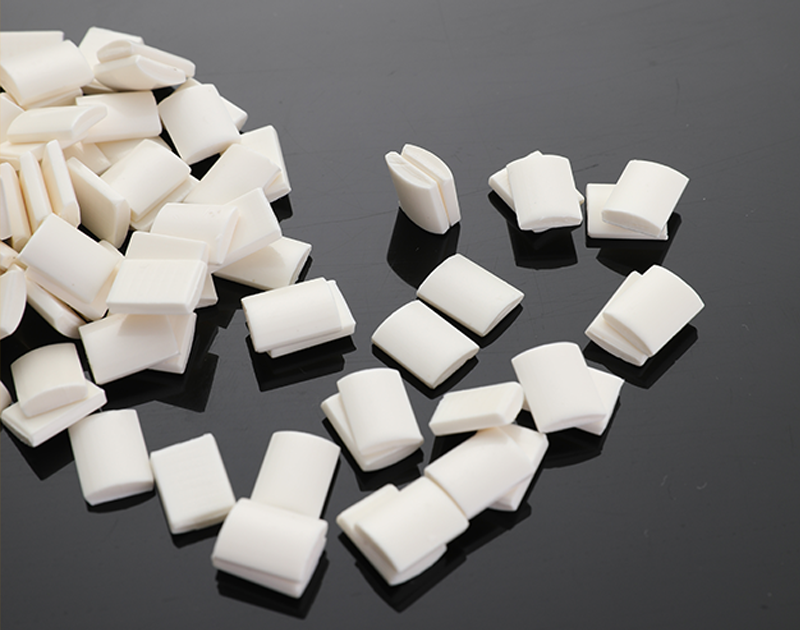
EVA hot melt performance is determined by several interacting properties rather than one specification.
| Property | Importance in Industrial Applications |
|---|---|
| Viscosity | Influences flow, bead formation, and substrate wetting |
| Open time | Determines how long the adhesive remains workable after application |
| Set speed | Affects production cycle and handling time |
| Initial tack | Helps maintain contact immediately after assembly |
| Final bond strength | Determines finished-product reliability |
| Heat resistance | Defines performance under elevated temperatures |
| Flexibility | Important for products exposed to movement or bending |
| Stringing | Affects appearance and equipment cleanliness |
Two EVA adhesives can therefore have noticeably different behavior even when both are suitable for general hot melt applications.
One of the main advantages of EVA hot melt is its processing efficiency. The adhesive can be applied in molten form and does not require solvent evaporation during normal bonding. Once the adhesive cools, the bonded components can generally move to the next production stage relatively quickly.
Fast setting is particularly valuable for automated packaging and assembly. A properly selected formulation can support short production cycles while maintaining consistent bead application.
Cost efficiency is another reason EVA remains widely used. When the application does not require exceptional resistance to moisture, chemicals, or prolonged high temperatures, EVA can provide an effective balance between performance and material cost.
EVA hot melt adhesive is used across several industrial sectors. Packaging applications include carton sealing, case closing, and paperboard bonding. Bookbinding processes can use EVA for spine and cover applications, while woodworking manufacturers may use it for selected assembly and component bonding operations.
It is also available in different physical forms, including sticks for manual or semi-automatic dispensing and bulk formats for industrial hot melt equipment.
For manufacturers comparing EVA glue products, the formulation should be evaluated according to the actual application rather than simply selecting the product with the highest nominal bond strength.
Yes. Packaging is one of the most established industrial uses for EVA hot melt technology.
Carton sealing requires the adhesive to wet the board rapidly, remain workable for the required interval, and develop enough strength before the carton leaves the compression section. The balance between open time and set speed is therefore particularly important.
Board characteristics also matter. Virgin and recycled corrugated board can have different absorbency, surface texture, moisture content, and fiber distribution. Coatings and printing can further change the bonding interface.
For high-speed packaging operations, packaging adhesive selection should therefore be based on the actual carton material and machine cycle rather than on adhesive chemistry alone.
EVA is widely used in bookbinding because it can provide rapid bonding and suitable flexibility for many paper-based products.
However, bookbinding is not a single application. Perfect binding, case making, and cover assembly can have different requirements for viscosity, open time, set speed, and flexibility.
Production speed should also be considered. A high-speed binding line may require an adhesive with faster setting behavior, while a process with longer positioning time may benefit from a longer open time.
Adhesive compatibility should be confirmed with the actual paper stock, cover material, and machine configuration before production approval.
EVA hot melt can be used for selected woodworking and furniture assembly processes where the expected service conditions are compatible with the adhesive's performance range.
Solid wood, plywood, MDF, particleboard, and coated boards can have substantially different surfaces. Moisture content and porosity also influence wetting and penetration.
For applications involving continuous mechanical stress or elevated service temperatures, manufacturers should carefully evaluate whether conventional EVA provides sufficient long-term performance or whether another adhesive technology would be more appropriate.
The correct temperature depends on the adhesive grade and should be taken from the manufacturer's technical data sheet.
When the adhesive is processed below its recommended range, viscosity can increase and substrate wetting may become inadequate. This can lead to poor bead formation or inconsistent bonding.
Excessive temperature is also undesirable. Prolonged overheating can accelerate thermal degradation, cause darkening, increase char formation, and create deposits around the nozzle.
For consistent production, manufacturers should monitor temperature throughout the adhesive delivery system rather than relying only on the tank setting.
EVA is versatile, but it is not the optimal solution for every application.
Because conventional EVA is thermoplastic, prolonged exposure to elevated temperatures can cause softening or creep. Applications exposed to continuous heat, heavy mechanical loads, or severe environmental conditions may require a more specialized adhesive.
Moisture resistance is another consideration. Standard EVA formulations can perform effectively in normal indoor conditions, but applications involving prolonged water exposure or high humidity should be evaluated carefully.
Difficult plastics can also require specialized chemistry because low surface energy can make wetting and adhesion more challenging.
EVA's main advantage is its balance of performance and processing simplicity. It is often more economical than reactive hot melt technologies and easier to process than systems that require post-application curing.
For demanding applications, however, polyolefin or polyurethane-based hot melts may offer advantages in specific areas such as heat resistance, moisture resistance, or difficult-substrate adhesion.
The appropriate technology should be selected according to the actual failure risks and operating conditions. A higher-performance adhesive is not necessarily a better commercial choice if the application does not require those additional properties.
A practical evaluation should include the following factors:
Substrate type and surface condition
Required bond strength
Application method
Production speed
Required open time
Required setting speed
Application temperature
Service temperature
Humidity and moisture exposure
Equipment compatibility
Adhesive consumption
Production trials should use the actual substrate and equipment. A laboratory sample can demonstrate basic adhesion, but it may not reveal problems such as stringing, nozzle contamination, insufficient wetting, or inadequate set speed at production line speeds.
Temperature influences virtually every stage of hot melt application. It affects viscosity, flow, wetting, open time, and thermal stability.
Manufacturers should follow the recommended hot glue melting temperature rather than assuming that a higher temperature will automatically improve bonding.
If the adhesive is already within its recommended processing range, increasing temperature may actually create unnecessary thermal stress. Consistent temperature control is usually more valuable than simply operating at the highest possible setting.
Stable adhesive performance comes from controlling both the adhesive and the application process. Equipment should maintain consistent temperature, nozzles should remain clean, and adhesive exposure to excessive heat should be minimized.
Application quantity should also be optimized. Too little adhesive may result in incomplete contact, while excessive adhesive can increase consumption, stringing, and cleanup requirements.
Manufacturers should establish process parameters through controlled trials and monitor them during production rather than changing settings reactively whenever a bonding problem occurs.
EVA hot melt adhesive is commonly used for packaging, bookbinding, woodworking, paper converting, carton sealing, and general industrial assembly.
Yes. Properly formulated EVA can provide reliable industrial bonding when matched with the appropriate substrate and process conditions.
Neither is universally better. EVA is often preferred for cost-efficient, fast-setting applications, while PUR can be advantageous where greater long-term resistance to heat, moisture, or mechanical stress is required.
Yes. EVA is widely used for corrugated cardboard and paperboard bonding, particularly in packaging applications.
Evaluate the substrate, application temperature, viscosity, open time, setting speed, required bond strength, service environment, production speed, and equipment compatibility before selecting a grade.
EVA hot melt adhesive continues to be an important industrial bonding solution because it offers a practical combination of performance, processing efficiency, and cost. The best results come from matching the formulation to the actual substrate and production process rather than treating all EVA adhesives as interchangeable products.
We assured you that your personal information will be kept confidential. The personal data we collect is only used to process your inquiry.


 Sep 20 2026


